
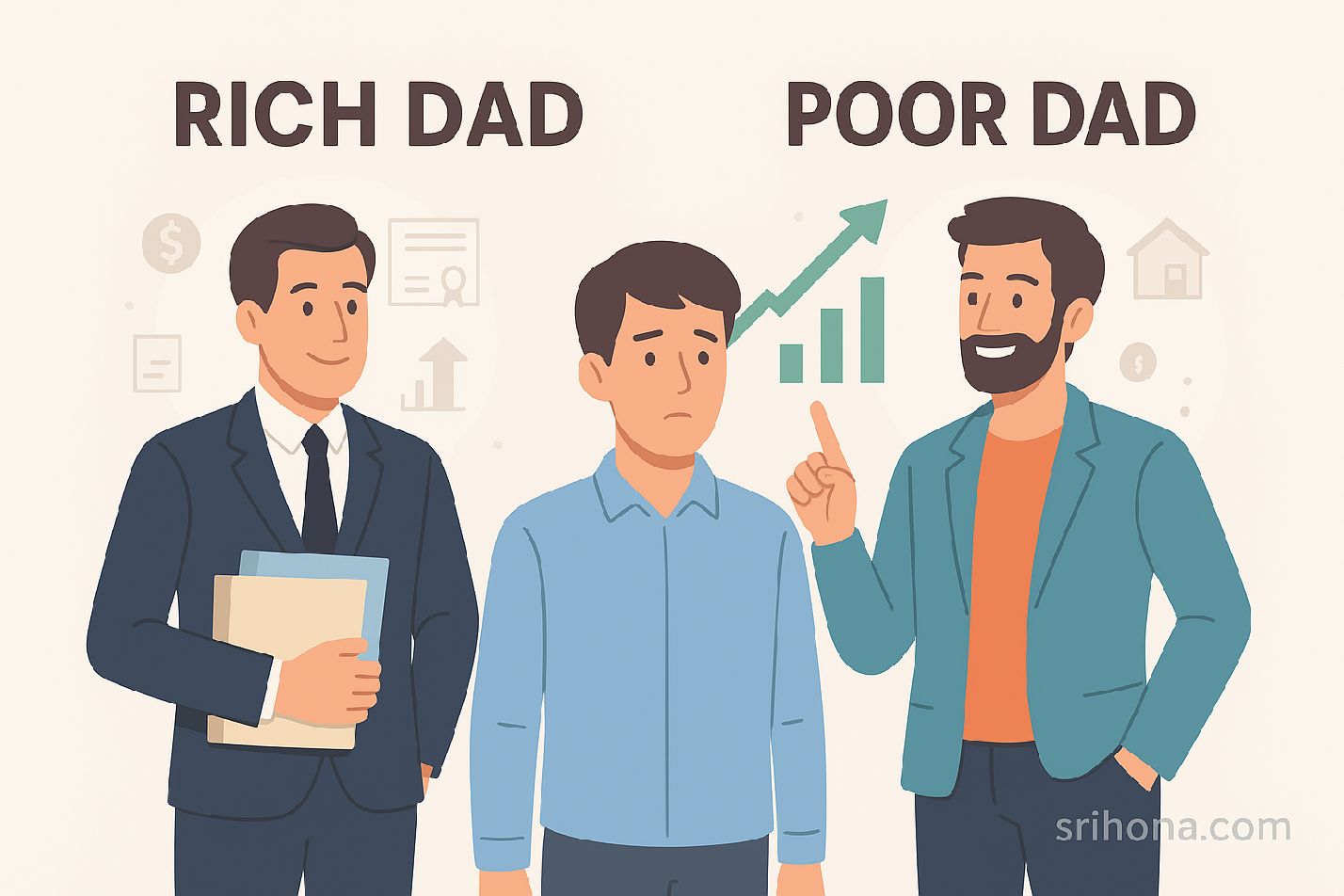
Understanding the Core Mindset Differences Between the “Rich Dad” and the “Poor Dad” story
Have you ever wondered why some people build wealth easily while others stay trapped in the same financial patterns for years? This is the exact question Robert Kiyosaki explores in the iconic Rich Dad Poor Dad story. More than just a book, it is a powerful comparison between two mindsets—one rooted in traditional beliefs and the other shaped by financial intelligence.
The contrast between these two father figures offers readers a new way of seeing money, opportunity, and financial literacy. And as you go through their lessons, you begin to realize that wealth isn’t only about how much you earn—it’s about how you think.
- Key Characters and Their Influence
Robert Kiyosaki grew up influenced by two very different father figures. His biological father, whom he calls Poor Dad, believed in job security, stable income, and traditional education. He was well-educated, hardworking, and respected—but struggled financially.
On the other hand, his friend’s father, the Rich Dad, understood money on a deeper level. He focused on building assets, creating opportunities, and developing strong money management habits.
These two viewpoints shaped Robert’s early beliefs. And as he observed both men closely, he began asking himself a crucial question:
Which path actually leads to long-term wealth?
- The Money Mindset Contrast
The biggest difference between the two dads was not income—it was mindset.
Poor Dad believed:
- A good education leads to a good job
- Job security is the safest path
- Saving money is the best way to stay stable
Rich Dad believed:
- Financial intelligence matters more than academic degrees
- Smart risks lead to growth
- Learning about money creates freedom
This contrast highlights a fundamental truth:
Your thoughts about money shape your financial reality long before your bank balance does.
By choosing the mindset of growth, learning, and strategic thinking, Rich Dad set the foundation for wealth and long-term success.
- Lessons on Assets and Liabilities
One of the most famous lessons from the book is simple but powerful:
“The rich focus on acquiring assets. The poor and middle class acquire liabilities they think are assets.”
This idea changes everything.
Assets include:
- Rental properties
- Businesses
- Investments that produce income
Liabilities include:
- Expensive cars
- High-interest loans
- Items that reduce your cash flow
Many people mistake liabilities for assets because they don’t understand how money moves. But once you understand the core meaning, your financial decision-making becomes stronger and smarter.
This principle alone helps readers transition from spending to building.
- Cash flow and the Path to Financial Independence
Rich Dad’s core strategy focused on cash flow—not salary. Most people work for money, but Rich Dad taught Robert the importance of making money work for you. That shift opened the path toward financial independence.
Instead of depending only on a paycheck, Rich Dad encouraged building income streams such as:
- Real estate
- Small business ventures
- Dividends
- Royalties
When your assets generate enough cash flow to cover your expenses, you experience true freedom:
You no longer rely on someone else’s company or decisions to determine your future.
- The Missing Subject in Schools: Financial Education
One of the book’s strongest messages is that schools teach students to work for money—but they rarely teach how money actually works. Robert realized that traditional education focuses on:
- History
- Science
- Math
- Languages
But not on financial education.
Rich Dad filled that gap by teaching him about:
- How to think like an investor
- How corporations protect money
- How taxes work
- Why money rewards those who understand the system
These real-world lessons empowered Robert to question the old belief that a job alone creates security.
- Learning Through Experience, Not Just Knowledge
Rich Dad pushed Robert to take action instead of waiting for the “perfect moment.” He believed that experience—especially failures—is the most powerful teacher.
Some of his best advice included:
- “Don’t fear losing. Fear not trying.”
- “Every mistake is a lesson if you learn from it.”
- “Opportunities are missed because people wait too long.”
This hands-on approach helped Robert learn how business, investing, and real markets work. Reading and studying mattered, but real growth came from stepping out of comfort zones.
- Building Wealth Through Entrepreneurship and Investment
A major theme of the story is entrepreneurship. Rich Dad emphasized that owning businesses, building systems, and investing strategically is the path to sustainable wealth.
He showed Robert how people who create solutions for others build more opportunities for themselves. Instead of trading time for money, they build assets that grow without constant effort.
This mindset shift inspires readers to explore:
- Small business ideas
- Long-term investments
- Passive income strategies
- Smart money moves
The more you learn and apply, the more your financial confidence grows.
- Why the Story Still Matters Today
Even today, the Rich Dad Poor Dad story continues to guide readers worldwide. Its lessons remain relevant because they address something universal:
The way you think about money determines the life you create.
Whether you’re a beginner or already on your wealth-building journey, these core principles can help you make better choices, break financial habits, and build long-term success.
FAQs: Rich Dad Poor Dad Story
- Is the Rich Dad Poor Dad story real?
Yes, the story is based on Robert Kiyosaki’s experiences, though many characters are simplified to teach financial lessons clearly
- What is the main lesson of Rich Dad Poor Dad?
The main lesson is understanding the difference between assets and liabilities, and learning to build income-generating assets.
- Does the book help beginners in financial literacy?
Absolutely. It’s one of the most beginner-friendly guides for understanding money, investing, and mindset.
- Can these principles help in real life?
Yes. Many people have transformed their financial habits by applying concepts like cash flow management, investing, and smart decision-making.
- Is it necessary to start a business to become rich?
- Not always. While businesses help, you can also build wealth through investing, property, or other assets.
Conclusion
The Rich Dad Poor Dad story is much more than financial advice—it’s a mindset shift that encourages you to question long-held beliefs about money, security, and success. By comparing two drastically different approaches to life, Robert Kiyosaki shows that wealth begins with awareness, grows through financial literacy, and expands through wise decisions. When you understand the difference between assets and liabilities, when you learn how income truly works, and when you commit to educating yourself beyond traditional systems, you unlock new levels of financial confidence. Ultimately, the lessons from Rich Dad challenge you to think bigger, act smarter, and build a future where your money works as hard as you do.
Disclaimer
The information provided in this article is for educational and informational purposes only. It should not be considered financial, investment, or legal advice. While every effort has been made to ensure accuracy, the author and website are not responsible for any losses, decisions, or actions taken based on this content. Readers should consult a qualified financial professional before making any major financial decisions. This article is an independent interpretation inspired by the concepts of Rich Dad Poor Dad and is not affiliated with or endorsed by its authors or publishers.